We are a community-first peer-to-peer marketplace platform for enthusiasts to buy, sell, and interact.We are a peer-to-peer marketplace for enthusiasts to buy, sell, and interact. Learn more




6 views today
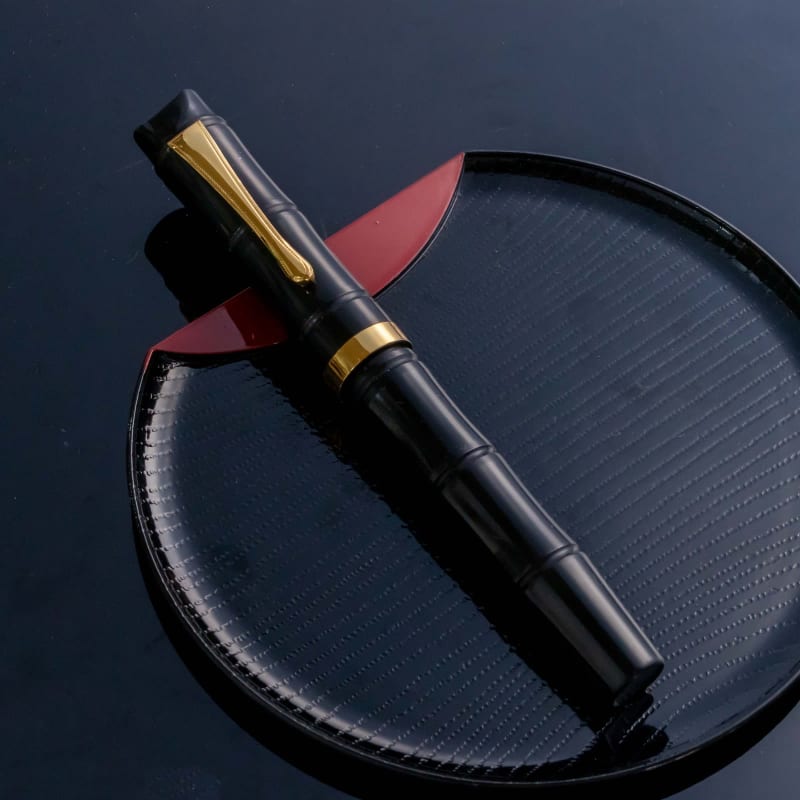
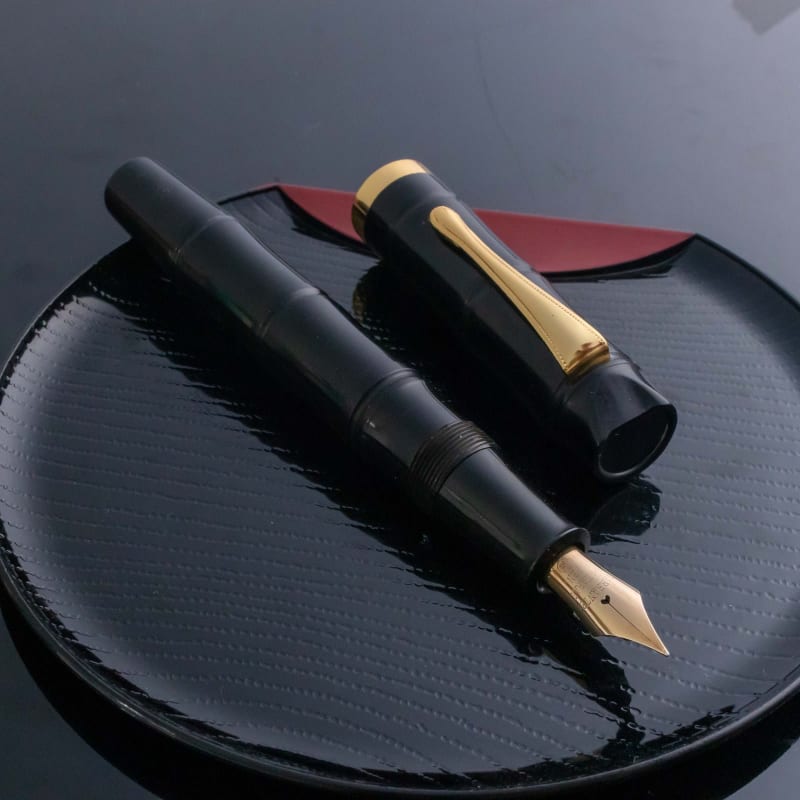
VINTAGE Sakai Eisuke Bamboo Pen Urushi Warranted 14 Semi-Flex Nib Fountain Pen
Condition: FineNib: Fine (F)Brand: Sakai EisukeSku: 2657
$630.00 USD
Specifications
Brand: Sakai Eisuke
Model: Bamboo
Era: 1940s
Body Material: Ebonite, Urushi
Filling System: Tomeshiki Filler System
Nib: Warranted 14K JIS Semi-flex G.K Nib
Color: Gold/Black
Length: 142 mm
Weight: 25.2 g
PRESENTATION
Pen + Original Box
Condition
In Good Condition!
The pen has been quite well reserved fortunately with no damage on the pen. The Nib and filler mechanism have been cleaned and tested.
History of 1940s Urushi Ebonite Fountain Pens
The 1940s Urushi Ebonite fountain pen represents an important chapter in the history of Japanese pen making, when traditional craftsmanship and modern writing technology came together to create writing instruments of exceptional quality. During this period, many of Japan's leading manufacturers--including Pilot, Platinum, and Sailor--produced fountain pens using ebonite (hard rubber) as the primary material, valued for its durability, warmth, and comfortable feel in the hand.
To enhance both beauty and longevity, these ebonite pens were often finished with natural Urushi lacquer, a centuries-old Japanese craft derived from the sap of the lacquer tree. Applying Urushi was a meticulous process requiring multiple hand-applied layers, with each coat carefully cured and polished before the next was added. The result was a deep, lustrous finish that protected the ebonite while showcasing the elegance of traditional Japanese lacquer artistry.
Many Urushi fountain pens from the 1940s were produced in a time of limited resources during and immediately after World War II. Despite these challenges, Japanese artisans continued to uphold remarkably high standards of craftsmanship, creating writing instruments that were built to last for generations. Their emphasis on quality materials, careful construction, and functional design has allowed many of these pens to remain fully usable decades later.
Today, 1940s Urushi Ebonite fountain pens are treasured not only for their historical significance but also for their timeless beauty and exceptional craftsmanship. They stand as enduring examples of Japan's ability to blend traditional lacquer techniques with precision pen making, creating writing instruments that are as meaningful to collect as they are to write with.
Sakai Eisuke Bamboo Fountain Pen
The Sakai Eisuke Bamboo Fountain Pen is a distinctive example of traditional Japanese pen craftsmanship, created by master pen maker Sakai Eisuke (酒井栄助). Known for his skill in shaping ebonite on a traditional lathe, Sakai produced fountain pens that combined practical writing design with carefully crafted forms. His work also contributed to the tradition of handmade Japanese pens later associated with the Ban-ei name.
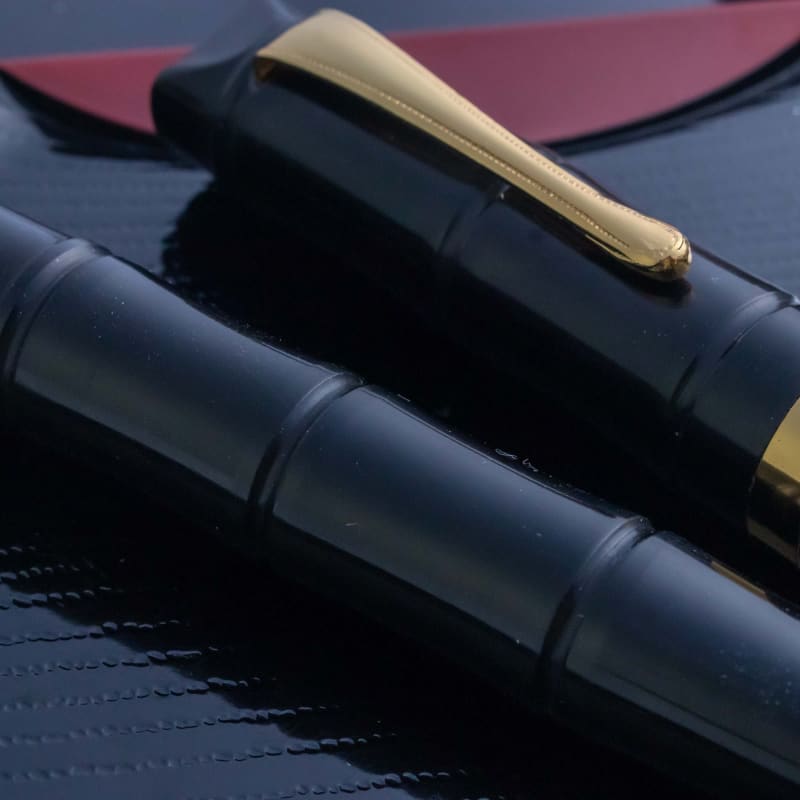
The pen’s defining feature is its bamboo-inspired design. Rather than using actual bamboo, the body is shaped from ebonite, a hard rubber material valued for its warm feel and suitability for precision turning. The carefully contoured barrel evokes the segmented form of a bamboo stalk, giving the pen an organic appearance while retaining the solid proportions of a traditional Japanese fountain pen.
Many examples feature a dark urushi lacquer finish, complementing the bamboo-shaped body and highlighting the craftsmanship involved in shaping and finishing the material. The pen is also associated with a traditional Japanese eyedropper filling system with an ink shut-off valve, designed to help prevent ink from flowing into the feed when the pen is not in use. Exact finishes and specifications may vary between versions.
The Bamboo Fountain Pen is also known in a special edition marking Sakai Eisuke’s 60th anniversary of pen making, released in 1994 in limited quantities. These versions were produced in different body sizes and fitted with gold nibs made by nib specialist Ginjiro Kabutogi. The collaboration between Sakai’s expertise in shaping pen bodies and Kabutogi’s nib-making skill reflects the highly specialized craftsmanship behind these Japanese writing instruments.
With its bamboo-inspired silhouette, ebonite construction, traditional filling mechanism, and handmade character, the Sakai Eisuke Bamboo Fountain Pen reflects a distinctive approach to Japanese fountain pen design, where material, shape, and writing function come together in a carefully crafted instrument.
Warranted 14K Pen JIS Semi-Flex Nib
The Warranted 14K Gold JIS Nib offers a traditional vintage writing experience, combining the natural resilience of 14K gold with the direct feel of a classic Japanese fountain pen nib. Its gold construction provides corrosion resistance and a degree of spring in the material, while the nib’s actual response depends on its individual shape and tuning.
On paper, the nib is suited to controlled, deliberate writing, with its point size determining the width and character of each stroke. A well-maintained nib can provide consistent contact with the paper and a smooth, predictable flow of ink. Its feel may range from firm and precise to slightly responsive, depending on the original design and present condition.
The nib’s writing character is shaped by more than its gold content alone. The tipping, tine alignment, and overall geometry all influence smoothness, feedback, and ink delivery. It should not automatically be considered flexible simply because it is made from 14K gold; any line variation depends on the specific nib’s construction and response to pressure.
The “Warranted 14K” and JIS engravings identify its gold content and Japanese standards marking, while the nib itself provides the distinctive tactile experience of vintage writing equipment. For those who enjoy a more traditional fountain pen feel, it offers a character shaped by its original design, material, and individual condition.
Available Items
VINTAGE Sakai Eisuke Bamboo Pen Urushi Warranted 14 Semi-Flex Nib Fountain Pen
Condition: FineNib: Fine (F)Sku: 2657
$630.00 USD
Seller

Shipping
Ships From
Japan
Processing Time
Ships in 1 week
Rates
Worldwide$26.25 (Free over $500.00)
Canada$26.25 (Free over $500.00)
European Union$26.25 (Free over $500.00)
Japan$10.50 (Free over $500.00)
Jordan$84.00
Kuwait$84.00
Lebanon$84.00
Oman$84.00
Qatar$84.00
Saudi Arabia$84.00
Switzerland$26.25 (Free over $500.00)
United Arab Emirates$84.00
United Kingdom$26.25 (Free over $500.00)
United States$26.25 (Free over $500.00)
Venezuela$84.00
Yemen$84.00
VINTAGE Sakai Eisuke Bamboo Pen Urushi Warranted 14 Semi-Flex Nib Fountain Pen
Condition: FineNib: Fine (F)Brand: Sakai Eisuke
Specifications
Brand: Sakai Eisuke
Model: Bamboo
Era: 1940s
Body Material: Ebonite, Urushi
Filling System: Tomeshiki Filler System
Nib: Warranted 14K JIS Semi-flex G.K Nib
Color: Gold/Black
Length: 142 mm
Weight: 25.2 g
PRESENTATION
Pen + Original Box
Condition
In Good Condition!
The pen has been quite well reserved fortunately with no damage on the pen. The Nib and filler mechanism have been cleaned and tested.
History of 1940s Urushi Ebonite Fountain Pens
The 1940s Urushi Ebonite fountain pen represents an important chapter in the history of Japanese pen making, when traditional craftsmanship and modern writing technology came together to create writing instruments of exceptional quality. During this period, many of Japan's leading manufacturers--including Pilot, Platinum, and Sailor--produced fountain pens using ebonite (hard rubber) as the primary material, valued for its durability, warmth, and comfortable feel in the hand.
To enhance both beauty and longevity, these ebonite pens were often finished with natural Urushi lacquer, a centuries-old Japanese craft derived from the sap of the lacquer tree. Applying Urushi was a meticulous process requiring multiple hand-applied layers, with each coat carefully cured and polished before the next was added. The result was a deep, lustrous finish that protected the ebonite while showcasing the elegance of traditional Japanese lacquer artistry.
Many Urushi fountain pens from the 1940s were produced in a time of limited resources during and immediately after World War II. Despite these challenges, Japanese artisans continued to uphold remarkably high standards of craftsmanship, creating writing instruments that were built to last for generations. Their emphasis on quality materials, careful construction, and functional design has allowed many of these pens to remain fully usable decades later.
Today, 1940s Urushi Ebonite fountain pens are treasured not only for their historical significance but also for their timeless beauty and exceptional craftsmanship. They stand as enduring examples of Japan's ability to blend traditional lacquer techniques with precision pen making, creating writing instruments that are as meaningful to collect as they are to write with.
Sakai Eisuke Bamboo Fountain Pen
The Sakai Eisuke Bamboo Fountain Pen is a distinctive example of traditional Japanese pen craftsmanship, created by master pen maker Sakai Eisuke (酒井栄助). Known for his skill in shaping ebonite on a traditional lathe, Sakai produced fountain pens that combined practical writing design with carefully crafted forms. His work also contributed to the tradition of handmade Japanese pens later associated with the Ban-ei name.
The pen’s defining feature is its bamboo-inspired design. Rather than using actual bamboo, the body is shaped from ebonite, a hard rubber material valued for its warm feel and suitability for precision turning. The carefully contoured barrel evokes the segmented form of a bamboo stalk, giving the pen an organic appearance while retaining the solid proportions of a traditional Japanese fountain pen.
Many examples feature a dark urushi lacquer finish, complementing the bamboo-shaped body and highlighting the craftsmanship involved in shaping and finishing the material. The pen is also associated with a traditional Japanese eyedropper filling system with an ink shut-off valve, designed to help prevent ink from flowing into the feed when the pen is not in use. Exact finishes and specifications may vary between versions.
The Bamboo Fountain Pen is also known in a special edition marking Sakai Eisuke’s 60th anniversary of pen making, released in 1994 in limited quantities. These versions were produced in different body sizes and fitted with gold nibs made by nib specialist Ginjiro Kabutogi. The collaboration between Sakai’s expertise in shaping pen bodies and Kabutogi’s nib-making skill reflects the highly specialized craftsmanship behind these Japanese writing instruments.
With its bamboo-inspired silhouette, ebonite construction, traditional filling mechanism, and handmade character, the Sakai Eisuke Bamboo Fountain Pen reflects a distinctive approach to Japanese fountain pen design, where material, shape, and writing function come together in a carefully crafted instrument.
Warranted 14K Pen JIS Semi-Flex Nib
The Warranted 14K Gold JIS Nib offers a traditional vintage writing experience, combining the natural resilience of 14K gold with the direct feel of a classic Japanese fountain pen nib. Its gold construction provides corrosion resistance and a degree of spring in the material, while the nib’s actual response depends on its individual shape and tuning.
On paper, the nib is suited to controlled, deliberate writing, with its point size determining the width and character of each stroke. A well-maintained nib can provide consistent contact with the paper and a smooth, predictable flow of ink. Its feel may range from firm and precise to slightly responsive, depending on the original design and present condition.
The nib’s writing character is shaped by more than its gold content alone. The tipping, tine alignment, and overall geometry all influence smoothness, feedback, and ink delivery. It should not automatically be considered flexible simply because it is made from 14K gold; any line variation depends on the specific nib’s construction and response to pressure.
The “Warranted 14K” and JIS engravings identify its gold content and Japanese standards marking, while the nib itself provides the distinctive tactile experience of vintage writing equipment. For those who enjoy a more traditional fountain pen feel, it offers a character shaped by its original design, material, and individual condition.
Updating your total…
Seller
Shipping
Ships From
Japan
Processing Time
Ships in 1 week
Rates
Worldwide$26.25 (Free over $500.00)
Canada$26.25 (Free over $500.00)
European Union$26.25 (Free over $500.00)
Japan$10.50 (Free over $500.00)
Jordan$84.00
Kuwait$84.00
Lebanon$84.00
Oman$84.00
Qatar$84.00
Saudi Arabia$84.00
Switzerland$26.25 (Free over $500.00)
United Arab Emirates$84.00
United Kingdom$26.25 (Free over $500.00)
United States$26.25 (Free over $500.00)
Venezuela$84.00
Yemen$84.00
Ask a question or make a comment
Please log in to leave a comment